
Roast Chicken Recipe (Balsamic Whole Roasted Chicken)

This roast chicken recipe is the most ridiculously delicious chicken you’ll ever put in your mouth!!!
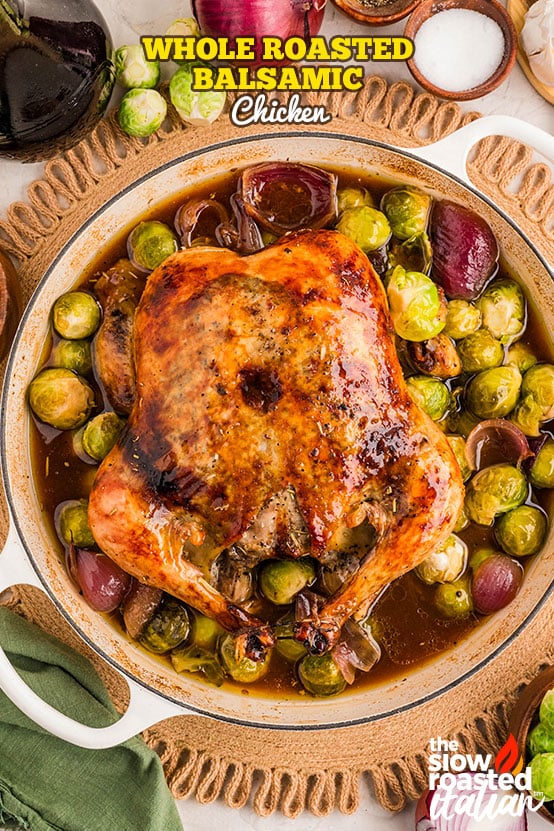
The aroma hits long before dinner does, warm and garlicky and sweet, and it will pull everybody in your house into the kitchen asking how much longer.
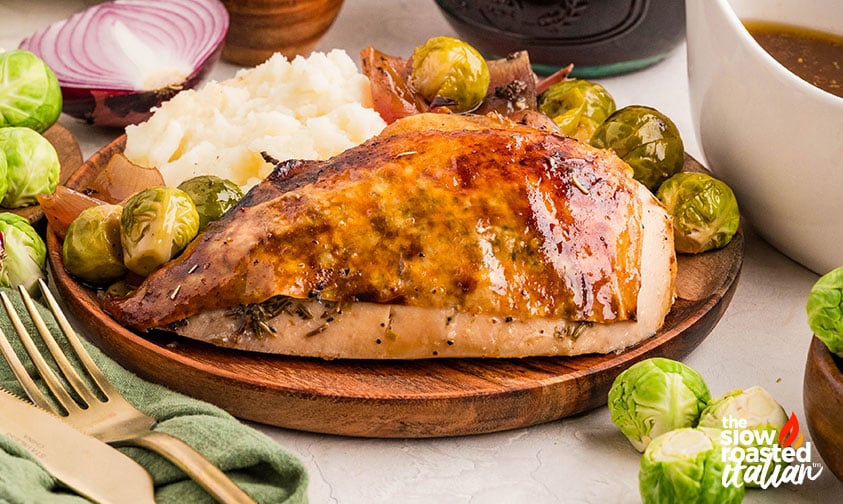
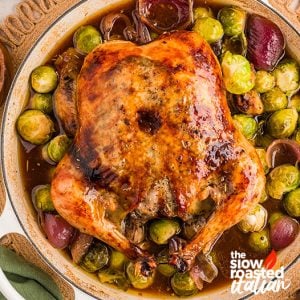
Then you cut into it and the skin shatters, and the meat underneath is so rich and juicy it runs right down your wrist.
And that sauce in the bottom of the pan, dark and sweet and tangy, you’ll spoon it over everything on your plate and then go back for more, because one pass is never enough.
That skin is the whole trick, and the reason it comes out like that isn’t the butter.
Why You’ll Love This Roast Chicken Recipe
- Two oven temperatures instead of one, so the breast stays juicy and the skin still crackles.
- The butter goes under the skin, so it seasons the meat instead of sliding off into the pan.
- The sprouts roast in the drippings, so your side dish finishes when the chicken does.
I have a ‘thing’ about balsamic vinegar, and it isn’t a small thing.
It’s in our favorite meatloaf. It’s in my meatballs. It goes into the pot roast that I make all the time! Years ago somebody brought me a bottle of the good stuff from Italy, and I loved it so much that I cooked it down and turned it into lollipops, after making a ton of other recipes with it. Which is either completely reasonable or the exact moment you learn something about me.
So a balsamic roast chicken? Nobody who knows me is surprised.
Then there are the Brussels sprouts, which I adore and almost never make, because I have zero self-control where they’re concerned.
My roasted ones call for a two pound bag and I’ll finish it over the course of a day. By myself. It’s a thing.
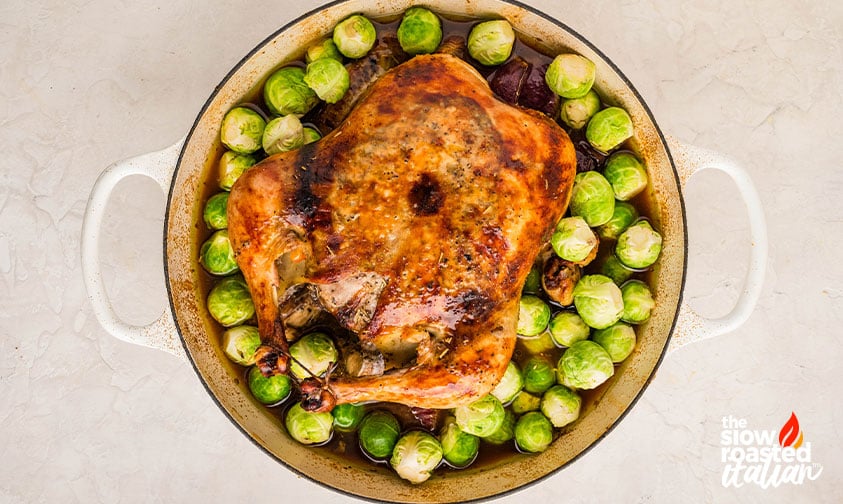
So this one pan holds everything I love at once. Roast it, rest it, and carve it where everybody can see.
Donna’s Pro Tips for How to Roast a Whole Chicken
- Lay the halved sprouts cut side down in the drippings. That flat face caramelizes instead of steaming, and it’s the best bite in the pan.
- Roasting a whole chicken goes easier when you read the thigh and never the breast. The breast comes in lower, and that’s right.
- Keep the fat you skim. Balsamic and garlic chicken fat over roasted potatoes is worth the jar.
I get asked about the two temperatures more than anything else here, so here’s the reason.
Breast meat gives up its moisture fast past 150 degrees, while thigh meat needs to climb past 165 before the collagen turns to gelatin and goes rich instead of chewy.
So it roasts gently at 350 first, then jumps to 450 for the last thirty to drive the skin.
Here’s the part nobody explains. You brush the skin with olive oil before that high heat, not more butter. Butter runs about eighteen percent water, and water on the skin steams it.
Oil has nothing in it to fight you.
Then give it the full twenty minute rest. I know you want to cut into it. Let it sit.
What Goes Into This Whole Roasted Chicken Recipe
- Balsamic vinegar: Regular supermarket balsamic is exactly right. The thick aged kind gets lost the second it hits a hot pan.
- Whole chicken: A roasting chicken runs bigger than a fryer. If yours is closer to four pounds, read the thigh early.
- Brussels sprouts: Halve them. Whole sprouts stay firm in the time the bird has left.
Roast Chicken Variations
- LEMON AND THYME: Thyme for the rosemary, lemon quarters in the cavity.
- ROOT VEGETABLES: Carrots, parsnips and potatoes in place of the sprouts, in with the onions at the start. Roast chicken and vegetables, one pan.
Other ways to cook a whole chicken: Lemon Roasted Chicken for a brighter oven bird, Air Fryer Whole Chicken when you want it fast, Slow Cooker Whole Chicken for a hands-off afternoon, and Smoked Whole Chicken when the smoker is already going.
Is It Better to Roast a Chicken at 350 or 400?
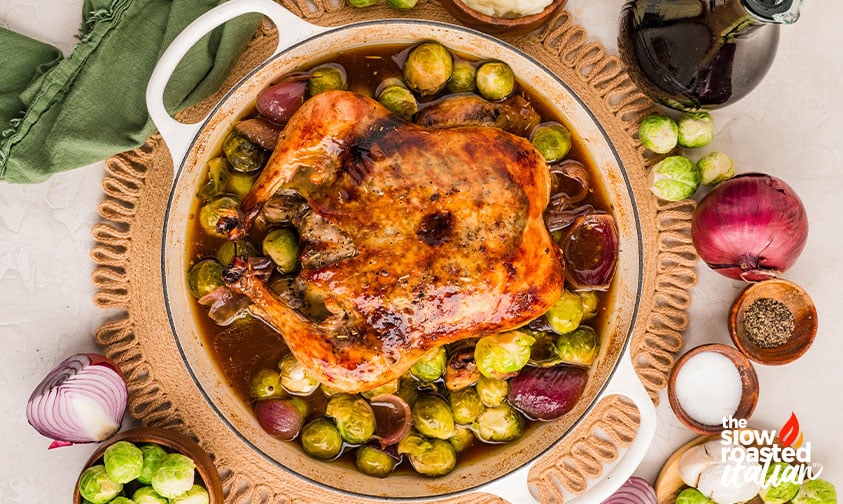
Both, in that order. Most baked whole chicken recipes pick one and accept the tradeoff. This whole chicken recipe roasts gently at 350 so the breast stays juicy while the thigh catches up, then finishes 30 minutes at 450 to drive the skin golden and crisp.
How Long to Cook a Whole Chicken in the Oven
A 5 to 6 pound bird takes 1 hour 10 minutes at 350 degrees F, about 10 minutes while the oven climbs, then 30 minutes at 450. With prep and both rests, you’re at 2 hours 55 minutes start to finish.
How Do You Roast a Whole Chicken Without Drying It Out?
Five things in this whole roasted chicken recipe handle it. Room temperature start, butter under the skin, stock and balsamic in the cavity, a foil tent through the high heat, and a full 20 minute rest. Do all five and the bird takes care of itself.
What Temperature Should a Whole Chicken Be?
Whole chicken internal temp is read in the thickest part of the thigh, away from the bone, and you want 170 to 175 degrees F. That sits above the USDA minimum of 165 on purpose, because dark meat turns tender and rich in that range.
How to Store Leftover Roast Chicken
Pull the meat off the bones while it’s warm, when it releases in big clean pieces. Leftover roasted whole chicken keeps 4 days refrigerated or 3 months frozen, and reheats best in a covered skillet with a splash of stock. Save those bones for Easy Chicken Noodle Soup.
Enjoy!
With love, from our simple kitchen to yours.
Don’t miss a thing! Follow us on
Facebook| X | Pinterest| Instagram
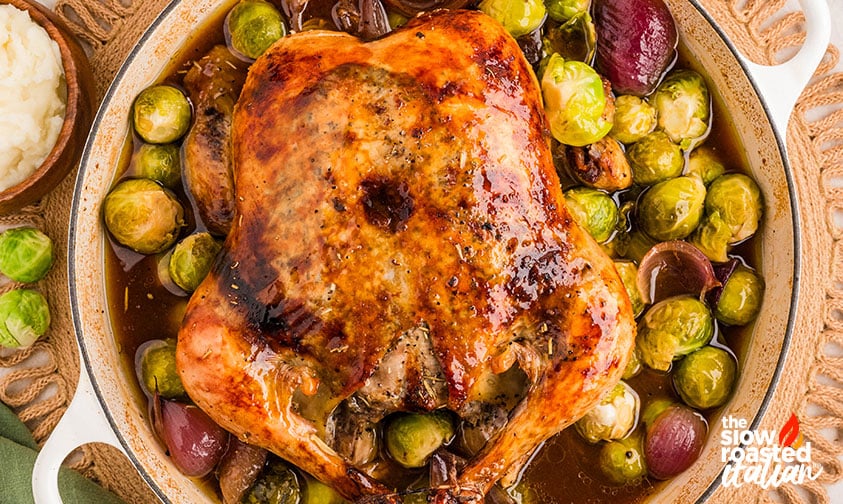
Whole Roasted Balsamic Chicken
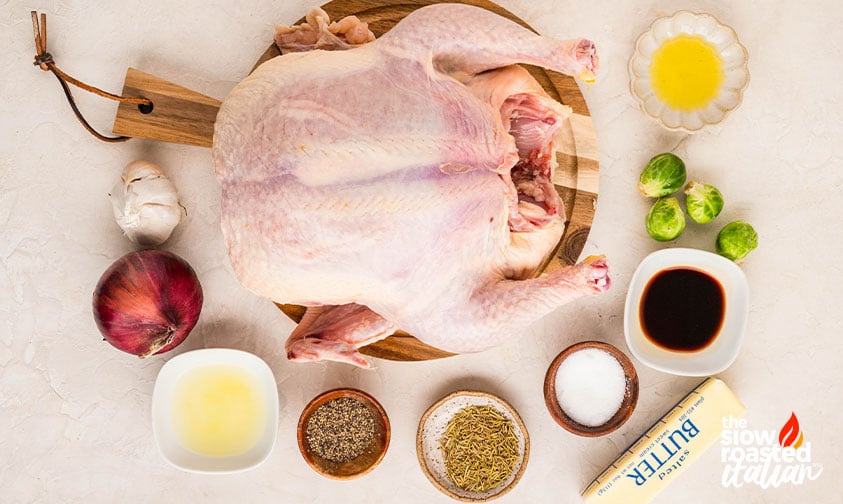
Ingredients
- 2 medium red onions, each cut into 4 wedges, (about 2 cups)
- 4 tablespoons unsalted butter, softened
- 2 teaspoons dried rosemary
- 4 cloves garlic, minced , (about 4 teaspoons)
- 1 tablespoon kosher salt
- 1 teaspoon coarse-ground black pepper
- 5 to 6 pound whole roasting chicken
- 1/2 cup chicken stock
- 1/2 cup balsamic vinegar
- 1 pound trimmed and halved Brussels sprouts, (about 4 cups)
- 2 tablespoons extra virgin olive oil
Instructions
- BRING CHICKEN TO TEMPERATURE: Remove the chicken from the refrigerator and set it on the counter for 20 to 30 minutes before you plan to cook it. Starting with a room-temperature bird means the meat cooks more evenly from edge to center.
- PREP THE OVEN: Position the oven rack in the lower third of the oven so the whole chicken fits without getting too close to the top heating element. Preheat the oven to 350 degrees F. The oven is ready when it holds a steady temperature and feels radiantly hot when you open the door briefly.
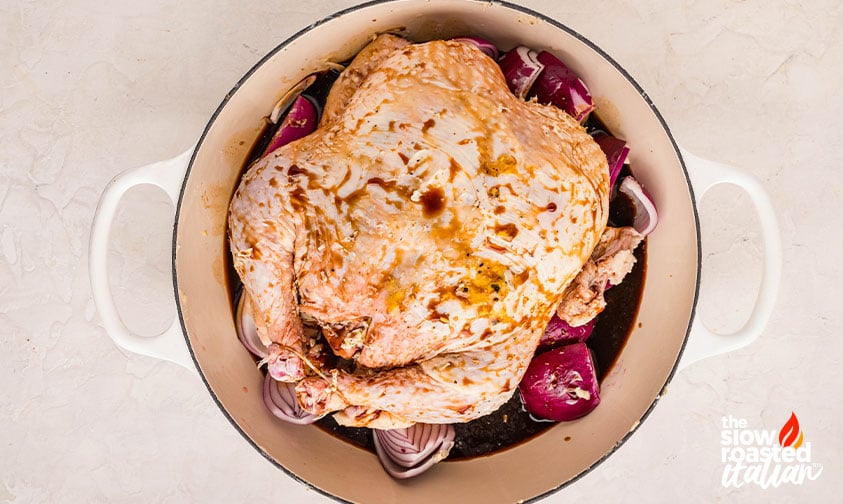
- BUILD THE BED: Scatter the 2 medium red onions, each cut into 4 wedges, across the bottom of a large roasting pan or braising pan in a single layer. The onions will caramelize under the chicken and add sweetness to the drippings.
- MAKE THE HERB BUTTER: In a small bowl, use a fork to mash together the 4 tablespoons unsalted butter, softened, 2 teaspoons dried rosemary, 4 cloves garlic, minced , 1 tablespoon kosher salt, and 1 teaspoon coarse-ground black pepper until everything is fully combined and the mixture has a fragrant, garlicky aroma.
- PREPARE THE CHICKEN: Pat the 5 to 6 pound whole roasting chicken dry all over with paper towels. Dry skin is the key to golden, crispy results. Set the chicken breast-side up on top of the onions.
- APPLY THE HERB BUTTER: Starting at the top of the breast, slide your fingers gently under the skin to loosen it from the meat, working carefully so the skin stays whole and connected. Slide your fingers further to loosen the skin over the thighs and legs as far as you can reach. Scoop up all the herb butter and spread it evenly under the skin, pressing from the outside to push it into every pocket. Use every bit of the butter mixture.
- TRUSS THE CHICKEN: Tuck the wing tips underneath the body of the chicken to keep them from burning. Cut a 12-inch piece of kitchen twine and tie the legs firmly together at the ankles. This keeps the shape compact so the chicken cooks evenly.
- ADD THE BRAISING LIQUID: In a small bowl or measuring cup, stir together the 1/2 cup chicken stock and 1/2 cup balsamic vinegar. Pour the mixture over the top of the chicken and directly into the cavity. The liquid will perfume the meat from the inside as it roasts.
- ROAST THE CHICKEN: Place the pan in the preheated 350-degree oven and roast for 1 hour and 10 minutes. The kitchen will fill with the warm, tangy aroma of balsamic and garlic as it cooks.
- ADD THE BRUSSELS SPROUTS: Remove the pan from the oven. Scatter the 1 pound trimmed and halved Brussels sprouts around the chicken. Use a spoon or tongs to toss them in the pan drippings and onions so they are coated in all that flavor.
- GLAZE AND RAISE THE HEAT: Brush the 2 tablespoons extra virgin olive oil evenly over the entire surface of the chicken. Increase the oven temperature to 450 degrees F. Allow about 10 minutes for the oven to come up to the higher temperature.
- FINISH ROASTING: Tent a sheet of aluminum foil loosely over the chicken, leaving the sides open for steam to escape. Return the pan to the oven and roast for an additional 30 minutes, or until an instant-read thermometer inserted into the thickest part of the thigh (without touching bone) reads 170 to 175 degrees F. The chicken is done when the skin is deep golden brown and the juices run clear when you pierce the thigh.
- REST THE CHICKEN: Remove the pan from the oven and let the chicken rest undisturbed for 20 minutes before carving. Resting allows the juices to redistribute through the meat so every slice stays moist instead of pooling on the cutting board.
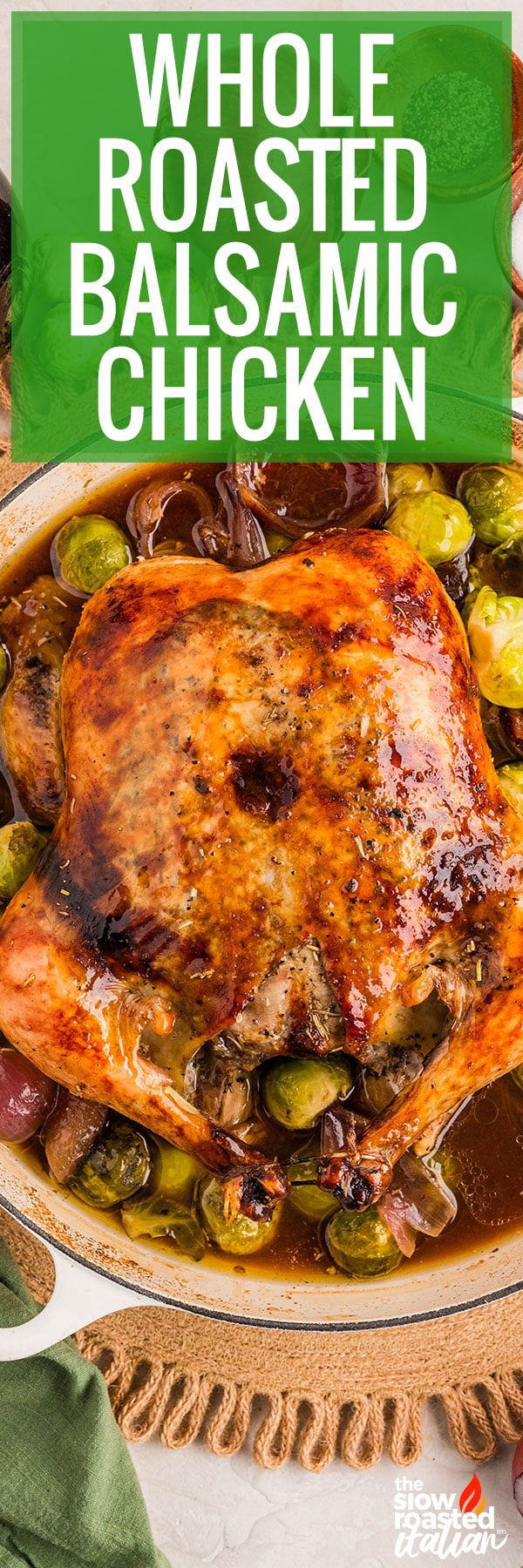
- CARVE AND SERVE: Transfer the chicken to a serving platter. Spoon the Brussels sprouts and roasted onions into a serving bowl or arrange them alongside the chicken on the platter. Tilt the roasting pan and skim off as much of the fat from the surface of the pan juices as you can using a large spoon. Drizzle the remaining pan juices over the carved chicken just before serving. The sauce is glossy and deep mahogany in color.
Donna’s Notes
Nutrition
All nutritional information is based on third party calculations and is only an estimate. Each recipe’s nutritional value will vary depending on the ingredients used, measuring methods, and portion sizes.
Originally published September 2026
Disclosure: Posts may contain affiliate links. If you purchase a product through an affiliate link your price will remain the same and The Slow Roasted Italian will automatically receive a small commission. Thank you for supporting us, it helps us keep creating new recipes.


Welcome!
We’re Donna and Chad, the dream team behind The Slow Roasted Italian. Our focus is on taking complicated OUT of the kitchen. Life is busy enough, making meals should be fast and easy, to help make your life as simple as possible. Read More >>